
— UNESCO sites, unique stories, easy logistics —
Slovakia Castle Tours: The Complete Guide for Tour Operators
When your clients think of Central European castles, they probably picture Neuschwanstein in Bavaria or Prague Castle. But Slovakia holds one of Europe’s best-kept secrets: the highest concentration of castles per capita on the continent and also in the world. With over 180 castle sites ranging from romantic ruins perched on dramatic cliffs to fully restored royal residences, Slovakia offers tour operators an undiscovered treasure that combines spectacular architecture, fascinating history, and exceptional value.
Why Slovakia Castles Beat the Competition
Unlike the overcrowded castle destinations in Western Europe, Slovakia’s castles offer your groups authentic experiences without the masses. Your clients won’t spend half their visit waiting in queues or fighting through crowds for photos. The logistical advantages are equally compelling: most major castles are easily accessible from Bratislava, with excellent coach access and ample parking.
The price-to-value ratio is unmatched. Where a castle visit in Austria or Germany might cost €20-25 per person, Slovakia’s castles typically charge €6-16, allowing you to offer premium experiences at competitive prices. Many castles also offer exclusive group packages including private tours, medieval banquets, and hands-on historical workshops.
Bratislava Castle: Your Essential Starting Point
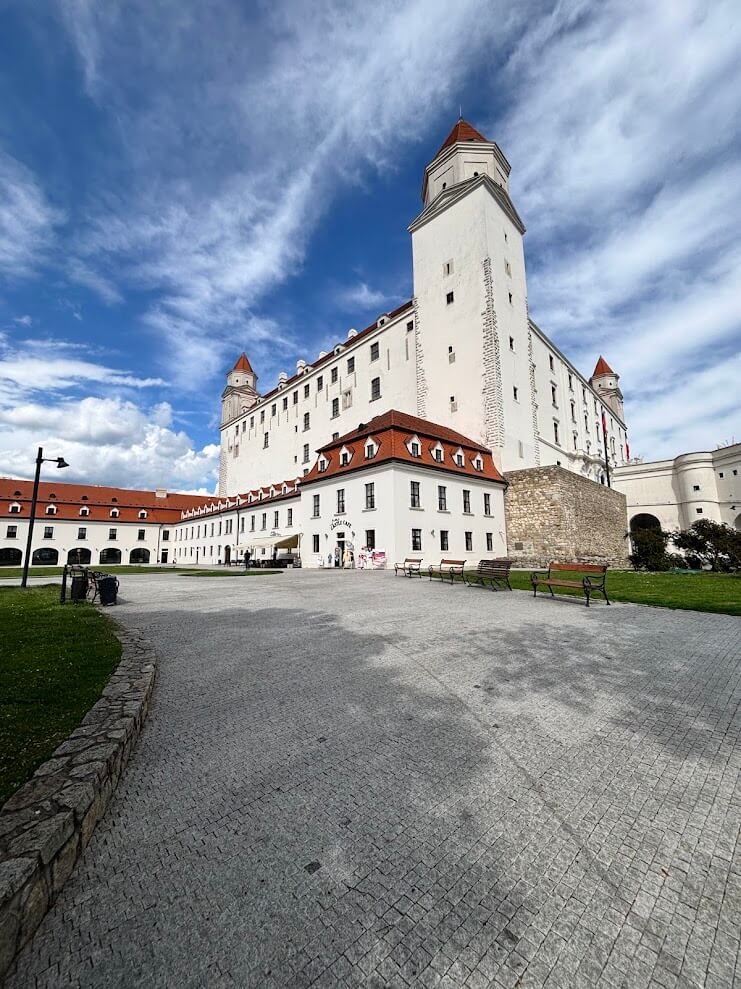
Every Slovakia castle tour should begin at majestic Bratislava Castle. This iconic landmark with its distinctive square floor plan dominates the capital’s skyline and serves as the perfect introduction to Slovak history.
The castle’s strategic position above the Danube has made it a seat of power for over a thousand years. But the story that captivates every group is the tale of Maria Theresa’s favourite daughter, Maria Christina. She was the only one of the empress’s sixteen children permitted to marry for love, and she chose Bratislava Castle as her residence with her husband, Albert of Saxe-Teschen.
Albert was a passionate art collector, and his collection, founded right here in Bratislava, would eventually become Vienna’s world-famous Albertina Museum — still bearing his name today. This connection between Bratislava and one of Europe’s greatest art museums surprises and delights every group.
The castle’s beautifully restored Baroque gardens offer spectacular photo opportunities, and the museum inside presents Slovak history in an accessible, engaging way. Coach access is excellent, with a large parking area just minutes from the entrance.
Devin Castle: Dramatic History Above the Danube
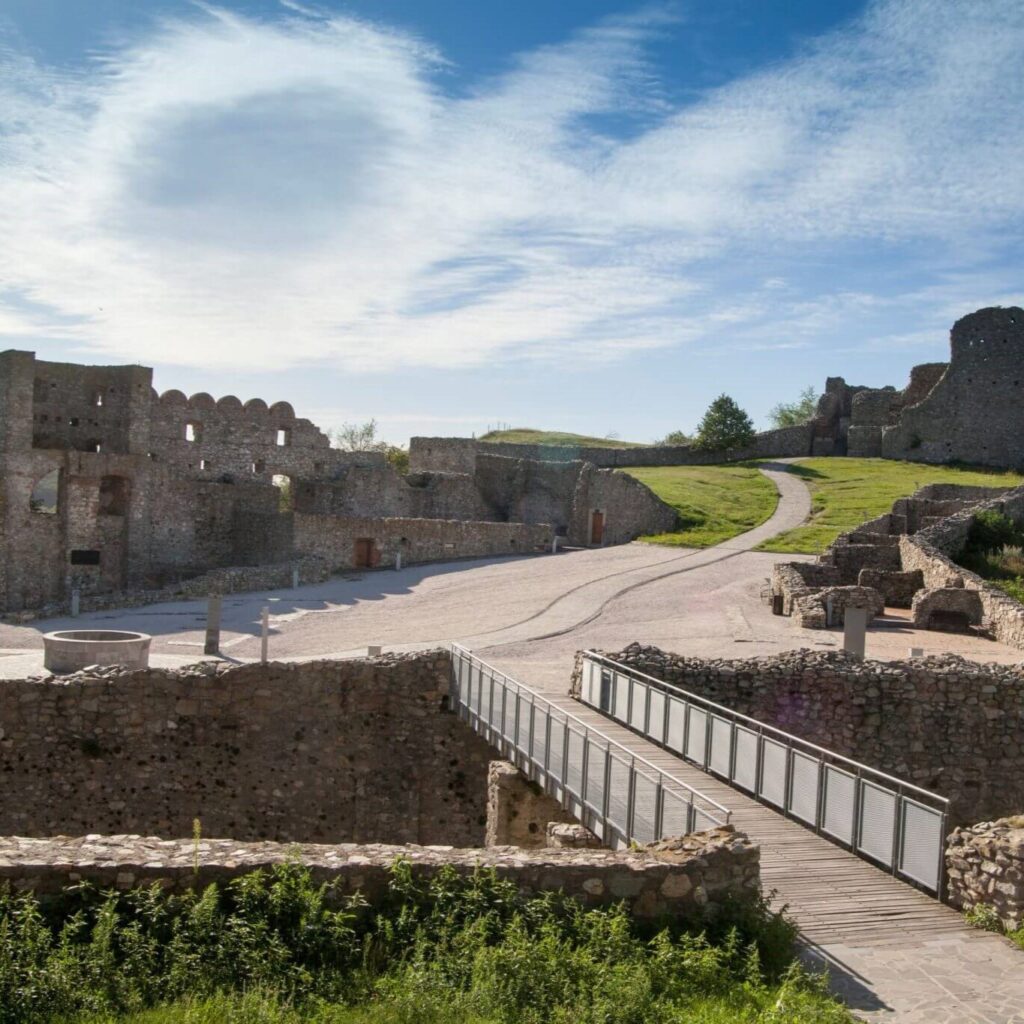
Just 15 minutes from central Bratislava, Devin Castle occupies one of the most spectacular positions you’ll find anywhere in Europe. Perched on a cliff where the Morava River joins the Danube, this castle ruin has witnessed over 2,000 years of history.
During the Cold War, Devin stood directly on the Iron Curtain border — the opposite riverbank was Austria and freedom. The castle became a powerful symbol of Slovak national identity during communist times, and the ruins themselves tell stories from the Great Moravian Empire to the Habsburg monarchy.
For tour operators, Devin offers exceptional flexibility. It works perfectly as a half-day trip from Bratislava, combines beautifully with a Small Carpathian Wine Route tour, or serves as a memorable stop en route to Austria. The dramatic clifftop setting guarantees stunning photos that your clients will treasure.
Orava Castle: Slovakia’s Most Photogenic Fortress
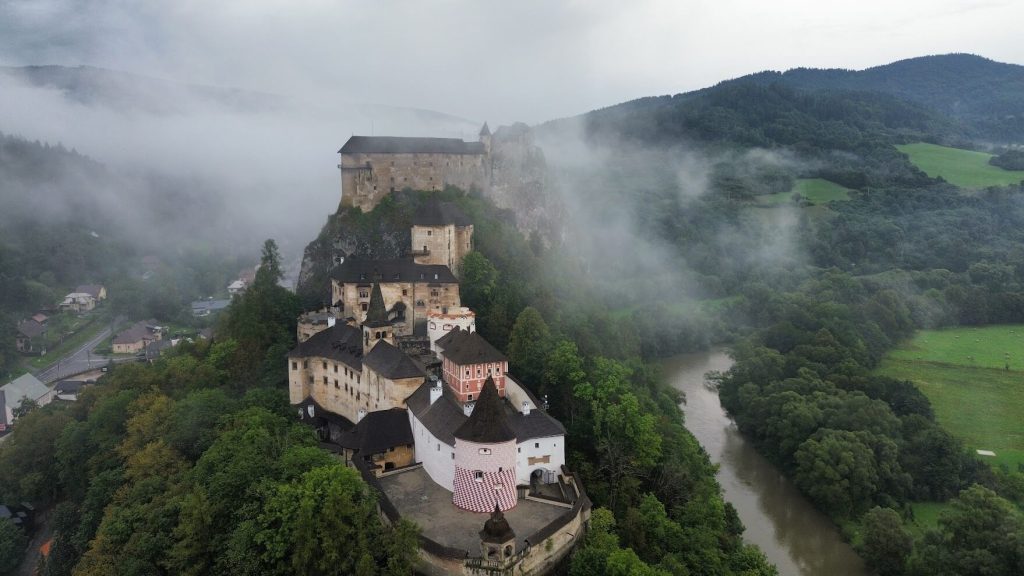
If you can only visit one castle outside Bratislava, make it Orava Castle. This is Slovakia’s most dramatic and photogenic fortress, rising from a high rock above the Orava River like something from a fairy tale.
The castle gained international fame as the filming location for Nosferatu (1922), the first Dracula film ever made. This connection to vampire legend adds an extra layer of intrigue for many groups, particularly around Halloween.
But Orava Castle offers much more than cinematic fame. The castle complex spans 700 years of architectural development, with Gothic, Renaissance, and Baroque elements creating a fascinating journey through time. The interior museum is excellent, presenting authentic period rooms and exhibitions on regional folk culture.
The castle sits in the heart of Slovakia’s most traditional region, making it perfect for comprehensive cultural tours. Combine it with wooden churches (UNESCO World Heritage), traditional sheep cheese workshops, and the forest railway in Oravská Lesná for an unforgettable authentic Slovakia experience.
Access is straightforward from both Bratislava (3.5 hours) and Krakow (2 hours), making Orava ideal for multi-country itineraries.
Trenčín Castle: European Capital of Culture 2026
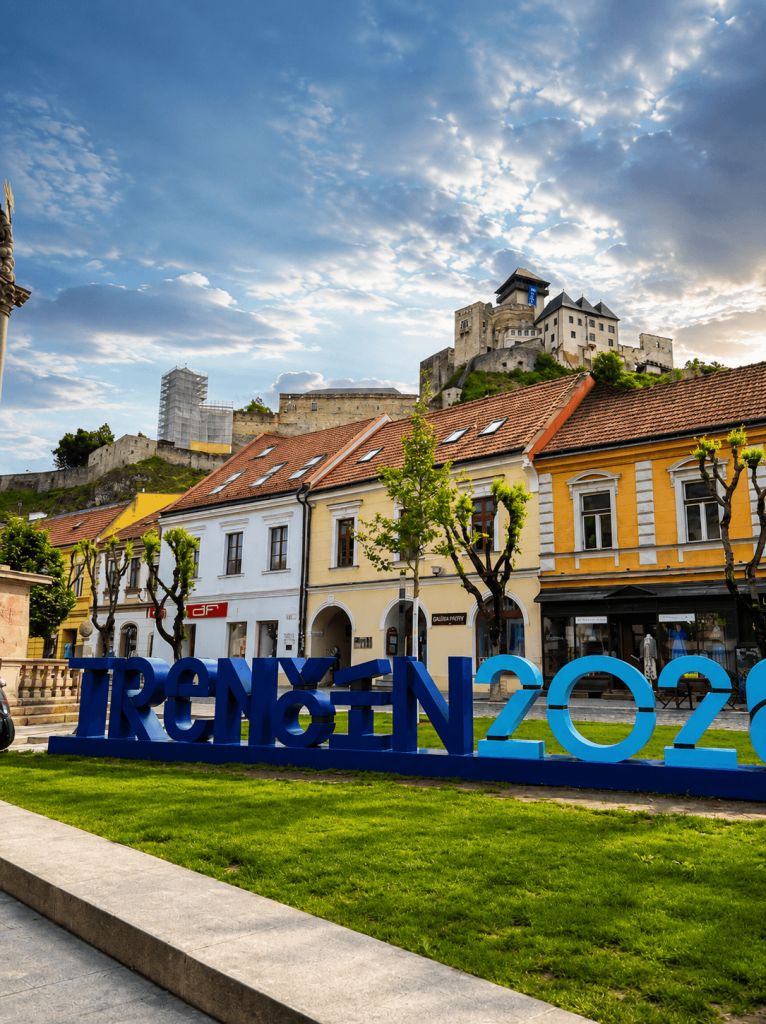
Trenčín Castle dominates its city from a spectacular rocky outcrop, visible from miles around. The castle’s history stretches back to Roman times — a Latin inscription from 179 AD, commemorating Roman soldiers under Marcus Aurelius, is the northernmost Roman inscription in Central Europe.
In 2026, Trenčín becomes European Capital of Culture, making this the perfect year to add it to your itineraries. The city will host numerous cultural events and exhibitions throughout the year, offering your groups something extra special.
The castle itself features the legendary Well of Love, with a romantic story that resonates with every group. According to legend, a Turkish prisoner dug a 70-meter-deep well through solid rock to win his freedom and his beloved. The well still exists, and the story of love conquering impossible odds touches every visitor.
Trenčín’s location makes it highly accessible from Bratislava (just 90 minutes by coach) and works perfectly as a stopover between Bratislava and the High Tatras or Czech Republic.
Spiš Castle: UNESCO World Heritage Spectacular
Spiš Castle is one of the largest castle complexes in Central Europe and a UNESCO World Heritage Site since 1993. The ruins sprawl across a limestone hilltop with views that extend for miles across the surrounding countryside.
The sheer scale impresses every group. Walking through the massive fortifications, your clients gain a visceral understanding of medieval military architecture and the power these castles projected. The castle served as a key fortress guarding trade routes between Hungary and Poland for centuries.
For tour operators, Spiš Castle works best as part of an eastern Slovakia itinerary, combining excellently with the High Tatras, Levoča (another UNESCO site), and Bardejov. The region offers exceptional value, with its unique UNESCO gothic heritage sites.

Old & New Castles Banská Štiavnica
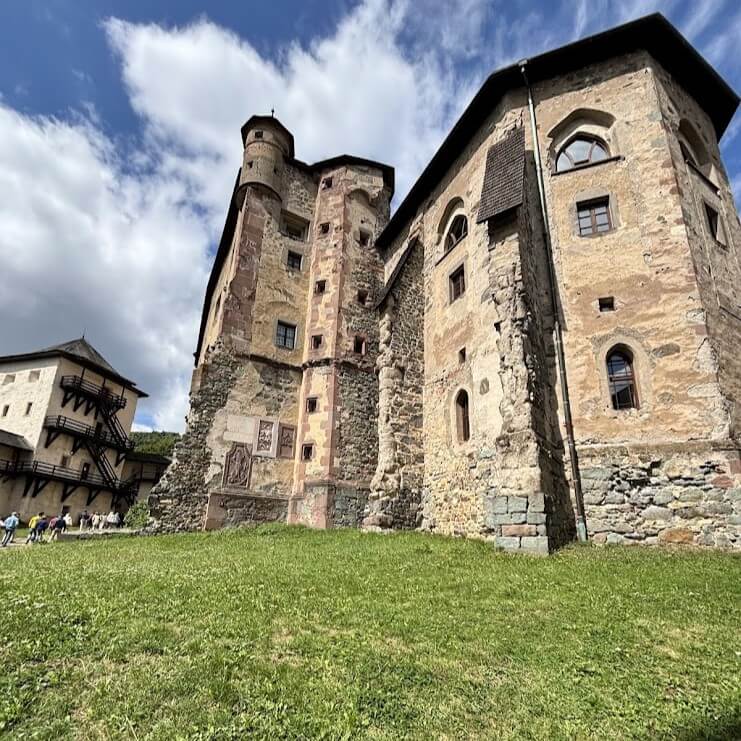
20Both of them are the strongholds built during the “Ottoman wars” between Austro – Hungarian Empire and Ottoman Empire. Banská Štiavnica as a rich mining city attracted the Ottomans. Therefore as the protection of the town were built two strongholds Old and New Castle.
Old Castle was rebuilded from former parish church of Virgin Mary from 13th century. The reconstruction resulted in the current three-storezed four wing building, around the central courtyard.
Perched in the heart of one of Slovakia’s most fascinating historic towns, the Old and New Castles of Banská Štiavnica tell the story of a city that once stood at the crossroads of wealth, power, and conflict. During the turbulent Ottoman wars between the Austro-Hungarian Empire and the Ottoman Empire, this rich mining town became a tempting target thanks to its silver and gold resources. To defend it, two strategic strongholds were built: the Old Castle and the New Castle.
The Old Castle has an especially unique history—it wasn’t originally built as a fortress at all. It began life as a 13th-century parish church dedicated to the Virgin Mary, later transformed into a defensive structure as threats grew in the region. Over time, it evolved into the impressive three-storey, four-winged complex we see today, arranged around a peaceful central courtyard. Walking through its stone passages today, it’s easy to feel the layers of history where sacred space was reshaped into a symbol of resilience and protection.
Coburg Hunting Chateau – St. Anton
Just a short drive from Banská Štiavnica, tucked into the surrounding countryside, stands the former hunting château of the influential Coburg family. The last royal owner was Ferdinand I of Bulgaria, a monarch whose life connected the royal courts of Europe in a remarkable way. From the outside, the château might surprise you—it looks almost modest, quietly blending into the landscape rather than demanding attention. But that first impression doesn’t last long.
Once you step inside the gates, the building reveals its deeper character: layers of history, symbolism, and refined architecture that tell a much richer story. Nothing here is accidental. The château was designed with striking symbolic precision—365 windows for every day of the year, 52 rooms for the weeks, 12 chimneys for the months, 7 arcades for the days of creation, and 4 entrances representing the seasons. What seems like a simple hunting residence suddenly transforms into a poetic architectural calendar, where every detail reflects a connection between royal life, nature, and time itself.

Building Your Castle Tour: Practical Recommendations
For a comprehensive castle experience, we recommend a minimum 4-day itinerary: Bratislava Castle and Devin Castle (days 1-2), Orava Castle combined with traditional Slovakia experiences (day 3), and either Spiš Castle or Trenčín Castle in combination with Bojnice Castle (day 4).
This structure offers variety — a royal residence, a dramatic ruin, a fairy-tale fortress, and either a massive UNESCO complex or a romantic castle with 2026 cultural programme. Your clients experience different architectural periods, regions, and historical narratives while maintaining comfortable travel times between destinations.
E-TRAVEL.SK can provide the tours in English, Spanish, French, Italian, German or any other “big” western language.
Slovakia’s castles offer tour operators an unbeatable combination: spectacular sites, rich history, authentic experiences, excellent accessibility, and outstanding value. Your clients discover destinations their friends haven’t seen, and you deliver memorable experiences that build loyalty and generate referrals. E-TRAVEL.SK will prepare you the best tailor made offer on the market.
FAQ – Slovakia Castle Tours (for Tour Operators)
Because they still feel undiscovered. Unlike Prague or Neuschwanstein, Slovakia’s castles are far less crowded, which means smoother logistics and a much more authentic experience for your groups. On top of that, you get incredible variety—from UNESCO-listed ruins to fairy-tale palaces—all within relatively short driving distances.
Yes, most of the key castles are very coach-friendly. Bratislava Castle, Devin, Trenčín, Orava, and Spiš all have organised access or nearby parking, and they’re already used to handling international groups. In practice, this makes operations simple and stress-free for tour leaders.
Orava Castle stands out for its dramatic “fairy-tale on a rock” appearance and film history (Nosferatu), while Spiš Castle impresses with its UNESCO status and massive scale—it’s one of the largest castle complexes in Central Europe. Together, they deliver two very different but equally memorable experiences.
Absolutely. Castles in Slovakia are often part of broader cultural routes—wine regions near Bratislava, traditional villages in Orava, UNESCO wooden churches in the north, or spa towns and historic cities in central Slovakia. This makes it easy to design full, varied itineraries without long transfers.
We can prepare tailor-made itineraries based on your group size, schedule, and target market. Just reach out and we’ll build a program that fits your clients—from classic highlights to more off-the-beaten-path experiences.
